
Sourcing Carpets from India for your Brand
Did you know India is the largest exporter of handmade carpets and floor coverings in the world?
India’s carpet industry has grown steadily over the years, establishing the country as a leading supplier in the global market. The country contributes over 40% of the world’s handmade carpet exports, with annual exports valued at around $1.5 to $2 billion. A significant portion of what India produces, nearly 85–90% is exported to international markets, making it a highly export-driven sector.
On a global level, India continues to hold the top position in handmade carpet production, supported by a workforce of over 2 million artisans, many of whom are based in rural regions. This widespread artisan network allows India to produce across categories ranging from premium silk carpets to everyday wool, cotton, and natural fibre rugs.
From finely knotted Kashmiri silk carpets to durable wool rugs and lightweight dhurries, Indian carpets bring together quality, craftsmanship, and a wide design range. Each piece reflects generations of weaving knowledge, with attention to detail that is difficult to replicate in machine-made alternatives.
Whether you’re building an e-commerce brand, curating a retail collection, or sourcing for interior projects, carpets from India offer a strong combination of product depth, pricing flexibility, and consistent supply. While other countries focus largely on machine-made production, India continues to lead in handmade categories, giving buyers access to products that carry both character and commercial value.
In this blog, we’ll walk through everything you need to know about sourcing carpets from India from understanding materials and weaving styles to identifying production regions, evaluating suppliers, and managing quality and logistics. This will give you a clear and practical roadmap to sourcing carpets with confidence.
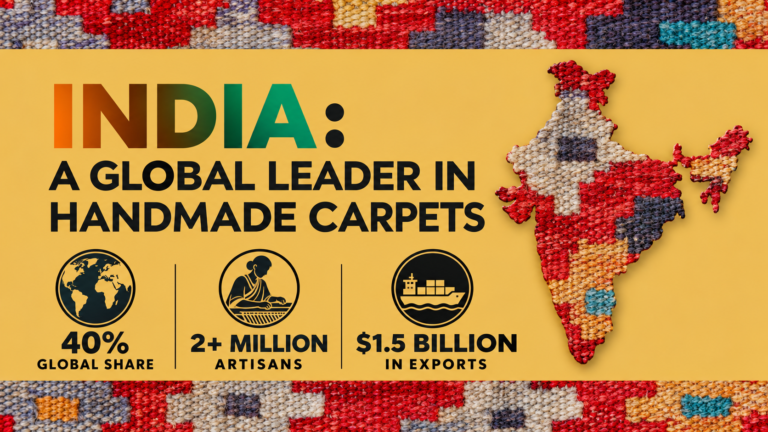
Table of Contents
Type of Rugs and Carpets you can Source from India
India offers rugs and carpets in a wide range of materials, weaving styles, designs and sizes. Buyers can source traditional hand-knotted carpets, lightweight cotton dhurries, contemporary rugs made from natural fibres and machine-made options for larger orders. The range includes both decorative pieces and products made for everyday use.
Understanding how rugs are made is a good starting point when comparing suppliers. The construction affects a rug’s appearance, feel, weight, price and production time.
Rugs by weaving and construction
Hand-knotted carpets are made by tying individual knots onto a foundation. They are often made from wool, silk or a blend of the two. Their detailed patterns and labour-intensive production make them a premium option.
Hand-tufted carpets are made by pushing yarn through a backing with a tufting tool. They can be produced in many colours, patterns and pile heights, making them a common choice for custom orders.
Handloom-woven rugs are woven on a loom, with the warp and weft forming the structure of the rug. Flat-weave rugs, including dhurries and kilims, have no raised pile. They are generally lighter than pile carpets and can often be used on either side.
Other construction types include punja-woven rugs, soumak rugs, hand-braided rugs, hand-hooked rugs and embroidered rugs. Buyers can also find shag, loop-pile, cut-pile and cut-and-loop styles, as well as printed, needle-punched and machine-made rugs.
Materials used in Indian Rugs
Wool is widely used for carpets and rugs with a soft, substantial feel. Silk is used in fine carpets and can add sheen and detail. Some rugs combine wool and silk to balance texture, appearance and cost.
Cotton is common in dhurries and flat-weave rugs. It is also used in blends with wool or jute. Natural-fibre options include jute, hemp, sisal, bamboo and coir. These fibres give rugs a more textured look and feel.
Suppliers may also offer viscose, art silk, Tencel, polyester, polypropylene, nylon and acrylic. Buyers looking for reclaimed materials can ask about recycled-fibre rugs and recycled-cotton rugs. Other options include leather, hide and mixed-fibre designs.
Regional styles ,weaving traditions, patterns and shapes in Indian Carpets
Indian rug production includes several established centres and regional traditions. Buyers may encounter Kashmiri silk and wool carpets, Agra carpets, and rugs made in and around Jaipur, Bhadohi, Mirzapur and Varanasi. Panipat is known for carpets and dhurries, while makers in Rajasthan, Punjab and Haryana also produce dhurries.
Other regional products include Warangal carpets, Eluru carpets and Navalgund dhurries. Suppliers may offer Sanganer or Bagru-inspired designs, as well as chindi rugs made from strips of fabric.
Some Indian makers produce rugs in styles associated with Persian, Mughal and Kashmiri designs. Buyers can also source contemporary collections based on geometric, floral, tribal, abstract or minimalist patterns. When a design draws from a regional or cultural tradition, ask the supplier about its origin and how it is made.
Patterns and design options
Common designs include floral and botanical patterns, stripes, checks, geometric forms, medallions, borders, paisley motifs and all-over patterns. Buyers can also find solid-colour, textured, embossed and animal-pattern rugs.
For projects with a defined visual brief, many suppliers can discuss custom colours, patterns and dimensions. Ask whether the design is woven, tufted, embroidered or printed, as the technique affects the final appearance and production details.
Shapes, sizes and intended use
Rugs are available in rectangular, square, round and oval formats. Common product types include runners, door mats, small accent rugs and large area rugs. Suppliers may also produce custom-size pieces, stair runners and wall-to-wall carpet.
The intended setting matters when choosing a product. Living rooms, bedrooms, dining rooms, kitchens, bathrooms, offices, hotels and outdoor spaces each call for different materials and construction. Buyers can also source prayer rugs, children’s rugs, pet-friendly designs, wall carpets and decorative tapestries.
Need help to find Best Indian Suppliers for your products?
Click here to find all details about how we can help Find and Connect you to Best Suppliers in India.
If you prefer a more hands-on approach, we also provide online video courses to help equip you with all the information so you can find Best Suppliers in India and have an entire contact directory of suppliers in minutes. Click here to Get all the details about Finding Indian Suppliers Courses.
Production Hubs of Rugs and Carpets in India
Rug and carpet production in India is spread across several states, with regional makers working in different materials, construction methods and design traditions. Jammu and Kashmir, Himachal Pradesh, Haryana, Punjab, Rajasthan, Uttar Pradesh, Gujarat, Kerala, Andhra Pradesh, Telangana, Odisha, Madhya Pradesh and parts of the North-East all contribute to the sector. The range includes hand-knotted carpets, hand-tufted rugs, flatweaves, dhurries and products made from recycled materials.
Bhadohi–Mirzapur: a major carpet-producing belt
Bhadohi and Mirzapur are among the best-known names in India’s carpet industry. The wider belt includes hand-knotted and handwoven production, with a substantial network of weavers, workshops and exporters. Buyers can find carpets in a range of materials, patterns and price points, including traditional designs and products developed for export markets. Bhadohi is also identified by the Government of India as a major carpet-export hub.
The region’s recognised products include the Hand Made Carpet of Bhadohi and Mirzapur Handmade Dari. A dari is a flatwoven floor covering, commonly known as a dhurrie in English-language trade. The official GI register uses the name “Mirzapur Handmade Dari”; the term “Mirzapur Handmade Dhurrie” is often used informally.
Kashmir: fine hand-knotted carpets
Kashmir is associated with hand-knotted carpets known for detailed patterning and fine workmanship. These carpets are often positioned in the premium segment, particularly when made with silk or fine wool. Buyers considering this category should ask suppliers about fibre content, knotting, dimensions, production time and whether the product is hand-knotted.
The registered GI name is Kashmiri Hand Knotted Carpet, rather than “Kashmir Handmade Carpet.” The GI register identifies it as a registered handicraft from Jammu and Kashmir.
Jaipur: flatweaves and design-led rugs
Jaipur is a sourcing option for flatweaves, dhurries and rugs with contemporary or design-focused patterns. Buyers may find geometric, striped, floral and abstract styles, along with custom colours and sizes. As with any sourcing cluster, the product range varies by supplier, so it is worth confirming the weaving method, fibre and finishing details for each style.
Panipat: hand-tufted and recycled-material rugs
Panipat is an important sourcing centre for hand-tufted rugs and other floor coverings. Buyers looking for larger quantities or a broad choice of colours and designs may find suppliers offering both custom-made and ready-made products. Some producers also work with recycled fibres and fabric remnants. Ask suppliers to specify the fibre mix and construction, especially when comparing products made from recycled materials.
Several products from these regions are protected under Geographical Indication (GI), including:
- Handmade Carpet of Bhadohi
- Mirzapur Handmade Dhurrie
- Kashmir Handmade Carpet
- Navalgund Durrie
- Agra Durrie
How to Source Carpets
Prepare a product brief before approaching suppliers. State the type of carpet you want, such as hand-knotted, hand-tufted or flatwoven, along with the material, size, design, colours, intended use and quantity. For custom work, include details such as knot density, pile height, backing and finish. A clear brief helps suppliers quote for the same product and makes it easier to compare their prices, MOQs and timelines.
Find suppliers
Start with the Carpet Export Promotion Council (CEPC) members directory to find carpet exporters. The India Carpet Expo, organised by CEPC, is a dedicated trade fair for handmade carpets, rugs and floor coverings. The IHGF Delhi Fair covers a wider range of home and handicraft products, with a carpets and rugs section. Check the organisers’ websites for current dates, venues, exhibitor lists.
Compare prices and MOQs
Carpet prices depend on the fibre, size, construction, knot density or pile height, design detail, finishing and level of customisation. A hand-knotted silk carpet will generally cost more and take longer to make than a simple cotton flatweave. Ready-made designs may be available in smaller quantities, while custom colours, sizes, patterns or private-label orders may require a higher minimum order quantity (MOQ). Ask suppliers for quotations that state the unit price, MOQ, sample costs, production time, packaging and shipping.
Approve samples and quality standards
Request material swatches and colour strike-offs before ordering a full sample. For a hand-knotted carpet, ask if the supplier can provide a corner sample of about 1–2 square feet. Once you approve the sample, agree on written quality checks for the fibre, knot density, pile-height consistency, colour, dimensions, backing and finish. If colour-fastness testing is needed, specify the relevant method from the ISO 105 series, which includes different tests for different conditions.
Check the supplier and product
Ask for business and export details, references, production capacity and certificates relevant to the carpet you are buying. CEPC membership or an RCMC can help confirm an exporter’s industry credentials, but does not certify a product’s quality. www.cepc.co.in Other certifications may apply to a specific product or buyer requirement:
- GoodWeave covers labour standards in carpet supply chains, including protections against child, forced and bonded labour.
- ISO 9001 relates to a supplier’s quality management system, not to the quality of a specific carpet.
- OEKO-TEX® STANDARD 100 tests textile products for harmful substances.
- Woolmark applies to qualifying wool products, including carpets. Check that the product and supplier’s licence are covered.
- GOTS may apply to carpets made with certified organic fibres, such as organic cotton. Check that the relevant supply-chain businesses and product are certified.
- Geographical Indication (GI) applies to qualifying products linked to a recognised place and production tradition, such as the Hand Made Carpet of Bhadohi or Kashmiri Hand Knotted Carpet. Confirm the registered name and authorised user.
- REACH is an EU chemicals regulation, not a general exporter certificate. For carpets sold in the EU, confirm which chemical restrictions apply and agree with the supplier on the evidence needed to demonstrate compliance.
Inspect before shipment
Approve a final production sample and arrange a pre-shipment inspection against the agreed specifications. Check for weaving defects, colour differences, measurements, finish and secure rolling and packing. Confirm the importing country’s requirements for the carpet and packaging, including any treatment or fumigation documents that may be needed. Make sure the final order also confirms payment terms, delivery schedule and responsibility for shipping costs.
An Ultimate Guide to Product Sourcing from India
Get the Entire product sourcing framework to Source products from India!

Looking to Source Products from India?
‘Sourcing with Kirti’, is your comprehensive solution to help you Source products from India. Our Done For You Sourcing services are tailored to offer seamless end-to-end solutions.Click here to get all details about our Sourcing Services.
We also have India Sourcing courses that provide equip you with all information, knowledge, tools, templates and resources to help source products from India.


