
Sourcing clothing from India for your Brand
India has consolidated its position as one of the most strategic sourcing destinations for apparel worldwide. With a deeply integrated textile manufacturing system, competitive pricing structures, and increasing compliance with global standards, the country continues to attract both emerging brands and established retailers.
This guide brings together current industry data, trade insights, and a complete sourcing framework to help you make informed decisions when working with Indian garment manufacturers.
Introduction: India’s Strength in Global Apparel
India’s connection with textiles and apparel is as old as its civilisation. The cotton spinners of the Indus Valley, the prized muslin of Bengal, and the opulent Banarasi brocades of the Mughal courts reveal how fabrics from India shaped global trade and fashion centuries before industrialisation. Even under colonial rule, Indian calicos, chintz, and handlooms dominated European markets, setting trends that continue to influence design today. This historic foundation has evolved into a modern export powerhouse-India is consistently ranked among the top five textile and apparel exporters globally.
According to recent data released by the Press Information Bureau in April 2026, India’s textile and apparel sector has maintained steady performance in global markets. Total textile exports, including handicrafts, reached ₹3,16,334.9 crore (approximately US$38–39 billion) in FY 2025–26, registering a 2.1% growth over the previous year .
Within this export basket, Ready-Made Garments (RMG) remain the largest contributor, accounting for exports of ₹1,39,349.6 crore, reflecting continued demand for Indian apparel across international markets . Cotton textiles, including yarn, fabrics, and made-ups, contributed over ₹1,02,399 crore, while man-made textiles recorded stronger growth at 3.6% year-on-year, indicating a gradual shift toward diversified fibre use .
Exports have expanded across more than 120 global destinations, with notable growth in markets such as the UAE (22.3%), Germany (9.9%), Spain (15.5%), and Japan (20.6%), pointing to increasing diversification beyond traditional markets .
In terms of employment, the textile sector continues to be one of India’s largest job creators. Government data confirms that it provides direct employment to over 45 million people, with millions more engaged indirectly across farming, processing, logistics, and retail . The sector also contributes significantly to the broader economy, accounting for around 8% of India’s total merchandise exports and forming a key pillar of the country’s manufacturing base.
For global brands and sourcing managers, what makes sourcing clothing from India especially attractive is its diversity and depth. India is equally capable of mass-producing wardrobe essentials like T-shirts, denim, loungewear, uniforms, and outerwear, while also offering premium, artisanal products such as handwoven Jamdani sarees, richly embroidered lehengas, and ikat fabrics dyed with natural methods. This unique dual advantage allows buyers to source both high-volume apparel and luxury, heritage-rich fashion pieces from the same country.
Sources:
Table of Contents
Why Choose India for Apparel Sourcing?
The country’s textile and apparel sector exports goods worth over $40 billion annually and employs more than 45 million people, placing it among the largest manufacturing sectors globally. These figures are consistently reported by the India Brand Equity Foundation.
Raw Material Strength Across Fibres
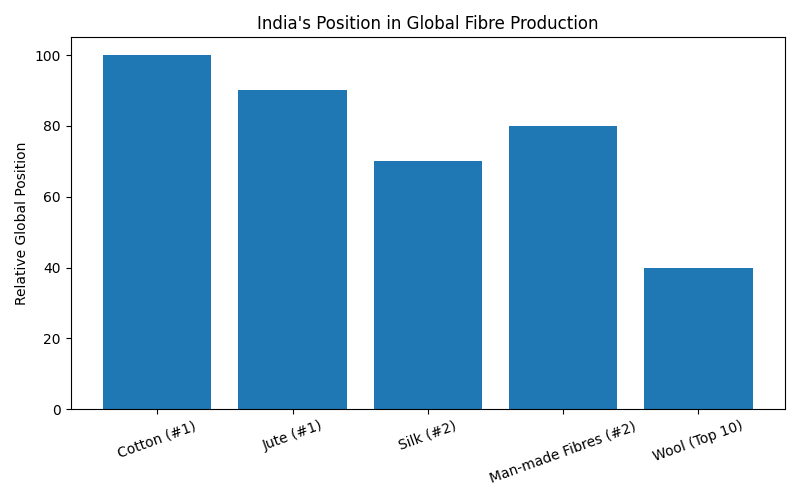
India’s advantage begins at the fibre level. It is the largest producer of cotton globally, contributing roughly one-fifth of global output, which ensures stable supply and pricing for cotton-based garments. Cotton remains the dominant fibre in India’s textile sector, accounting for more than half of total fibre consumption.
The country also ranks as the second-largest silk producer, with annual output exceeding 35,000 metric tonnes, supported by established centres such as Mysuru and Bhagalpur. In addition, India is the largest producer of jute, contributing close to 70% of global supply, and remains a key producer of wool.
Man-made fibres are expanding rapidly. India is now the second-largest producer of synthetic fibres globally, with cities like Surat producing large volumes of polyester and viscose fabrics daily. This combination allows buyers to source across natural and synthetic categories without shifting geographies.
India’s Garment Industry massive Scale and Structure
India’s textile and apparel sector operates at a massive scale and remains a key contributor to global trade.
- $40+ billion in annual textile and garment exports
- 45 million+ workforce, making it one of the largest employment generators
- 100,000+ garment factories across the country
- World’s largest cotton producer, ensuring strong raw material availability
According to India Brand Equity Foundation, the sector benefits from strong government backing through export incentives such as RoDTEP and RoSCTL, along with continued infrastructure investments in textile parks and logistics.
A defining feature of India’s industry is vertical integration. Many manufacturers operate across the full chain:
cotton → yarn → fabric → dyeing → stitching → finishing → export
This allows tighter quality control, pricing efficiency, and reduced dependency on external suppliers.
The handloom sector alone produces over 6 billion square metres of fabric annually, indicating that traditional production continues to operate alongside mechanised manufacturing. On the industrial side, India has over 100,000 garment factories, ranging from small units to large export houses
Depth in Embroidery and Surface Techniques
India is especially known for its embroidery and embellishment work. Techniques such as Zardozi use metallic threads for ornate detailing, while Aari and Zari work rely on fine hook-based stitching. Kantha from Bengal creates layered patterns through running stitches. Phulkari from Punjab is recognised for bold floral designs, and Chikankari from Lucknow is valued for its fine handwork on lightweight fabrics. Mirror work and bead embroidery from Gujarat and Rajasthan, along with detailed sequin and hand-beading techniques, continue to be widely used in both traditional and international fashion.
Role in Global Luxury and Couture Production
This depth of craftsmanship has made India a preferred sourcing base for high-end fashion. Many global couture houses rely on Indian artisans for intricate handwork, often working with clusters in Delhi, Mumbai, Lucknow, and Jaipur. These contributions are not always visible to consumers, but they are central to the production of many luxury garments sold in Europe, North America, and the Middle East.
Modern Manufacturing and Industrial Capability
India has strengthened its position through modern industrial development. Manufacturing hubs such as Tiruppur, Bengaluru, and Noida are equipped with advanced production systems, including automated cutting machines, CAD and CAM design tools, and large-scale dyeing and finishing units. Factories in these regions regularly meet international compliance requirements, allowing them to supply to major global retailers. What stands out is the ability to combine traditional hand skills with organised, high-volume production.
Government Support and Industry Development
Government policy plays a major role in strengthening the sector.
Key initiatives include:
- Production-Linked Incentive (PLI) scheme focused on man-made fibres and technical textiles
- PM MITRA Mega Textile Parks, designed to create integrated manufacturing zones
- RoDTEP and RoSCTL export rebate schemes, reducing export costs
- Investment in infrastructure through textile clusters and logistics improvements
The government allocated over ₹5,000 crore to the textile sector in recent budgets, reflecting continued focus on expansion and export competitiveness.
Geographical Indication and Product Authenticity
Several textile products, including Banarasi silk, Mysore silk, and Pochampally Ikat, are protected by Geographical Indication tags. These tags provide assurance of origin and authenticity, which is particularly important for buyers working with heritage or craft-based product lines.
Cost Efficiency Without Limiting Options
For global buyers, India offers cost efficiency without reducing product range. Cotton garments, in particular, are often priced 15 to 30 percent lower than comparable products from China. This is supported by domestic raw material availability, labour costs, and export incentives that reduce overall sourcing expenses.
Design Flexibility and Product Development Strength
Indian manufacturers offer strong design and development capabilities. They are well suited for products that require embroidery, mixed prints, handcrafted finishes, or styles that combine traditional and contemporary elements. This makes India a practical choice for brands looking to create differentiated products rather than standardised basics.
Lower Minimum Order Quantities
Another important factor is flexibility in order quantities. Many factories are open to producing smaller batches, often starting from 100 to 500 pieces per style, and in some cases even lower. This is particularly useful for emerging brands that want to test products without committing to large volumes.
Sustainability and Organic Production Capacity
Sustainability is an area where India has gained attention. As the largest producer of organic cotton and with more than 2,000 GOTS-certified facilities, the country offers strong options for brands focusing on responsible sourcing. Environmental and ethical considerations are now integrated into many supply chains.
Compliance with Global Standards
Compliance is essential for international buyers. Leading exporters in India meet standards such as WRAP, SEDEX or SMETA, BSCI, SA8000, and OEKO-TEX. These certifications are often required for entering markets in the European Union, the United Kingdom, and the United States, and Indian manufacturers are generally well prepared to meet these expectations.
A Versatile and Reliable Sourcing Destination
Taken together, these factors position India as one of the most versatile sourcing destinations in the global apparel industry. It can support everything from large-scale production of everyday garments to highly detailed, handcrafted pieces for premium markets. For brands that want to combine cost control with quality, flexibility, and a connection to material and craft traditions, India offers a sourcing environment that is dependable and wide-ranging
India’s Apparel Manufacturing Hubs
One of India’s greatest strengths is that its textile industry is regionally diverse. Different states and cities specialise in distinct products, meaning buyers can explore clusters that fit their exact needs.
Southern India
- Tiruppur, Tamil Nadu – Knitwear Capital of India
Tiruppur is the undisputed hub for cotton knitwear, producing more than 90% of India’s knitwear exports. Known as the “Manchester of Knitwear,” the city has evolved from small workshops into a global hub, exporting T-shirts, loungewear, and innerwear to over 35 countries. It is well-integrated, with dyeing, bleaching, and finishing units ensuring end-to-end production. Major global retailers like H&M, Walmart, and Tommy Hilfiger source from Tiruppur. - Coimbatore, Tamil Nadu – Spinning & Yarn Hub
Coimbatore, often called the “Manchester of South India,” is the heart of India’s spinning industry. It houses over 3,000 mills producing cotton yarn, which supplies not only domestic manufacturers but also global fabric buyers. The city also supports technical textiles and industrial fabrics, making it vital to the larger apparel ecosystem. - Erode, Tamil Nadu – Powerloom & Fabrics
Erode is famous for its lungis, dhotis, and cotton sarees, but its real strength is in greige fabrics produced by its extensive powerloom network. These fabrics are exported directly or sent to other cities for dyeing and printing. - Salem, Tamil Nadu – Silk & Blends
Salem combines its legacy of silk weaving with a growing strength in blended fabrics. Buyers seeking cotton-silk fabrics, lightweight sarees, and affordable blends find Salem a strong source. - Bengaluru, Karnataka – RMG Export Hub
Bengaluru has become a major export hub for ready-made garments, particularly women’s wear, activewear, and dresses. It is known for its compliance-friendly factories and skilled tailors. Many factories here supply directly to global brands like Zara, Mango, and GAP, making Bengaluru one of the safest bets for international buyers. - Mysuru, Karnataka – Mysore Silk
Famous for its GI-tagged Mysore silk sarees with gold zari borders, Mysuru is a premium luxury textile hub. The Mysore silk tradition is centuries old, and today the Karnataka Silk Industries Corporation continues to uphold its reputation. - Pochampally, Telangana – Ikat Weaving
The GI-tagged Pochampally Ikat is recognised worldwide for its intricate tie-dye weaving technique, where yarns are dyed before weaving. These fabrics are valued by boutiques and luxury brands for their uniqueness and sustainability
Northern India
- Ludhiana, Punjab – Woollen Knitwear
Ludhiana is India’s woollen capital, producing sweaters, shawls, and cardigans for both domestic and international markets. Its MSME base, coupled with access to raw wool and synthetic fibres, has made it a winter wear hub for exports to Europe and North America. - Panipat, Haryana – Home Textiles
Panipat is often called the “City of Weavers” and is a major source of home furnishings, including rugs, blankets, and floor coverings. It supplies to top global home brands like IKEA and exports to more than 50 countries. - Delhi-NCR – Fashion & Export Houses
Delhi NCR is not a production hub in the same sense as Tiruppur or Ludhiana, but it is home to hundreds of buying houses and export agents. It caters to high-fashion garments, formal wear, and premium small-batch productions. Many European and American buyers prefer to work through Delhi’s buying houses for ease of communication and quality control. - Kanpur, Uttar Pradesh – Leather & Textiles
Kanpur is historically one of India’s largest leather hubs, producing jackets, bags, belts, and footwear. It also has a textile side, specialising in canvas and workwear. For buyers of leather apparel and accessories, Kanpur is unmatched. - Varanasi, Uttar Pradesh – Banarasi Silk
Varanasi is synonymous with Banarasi silk sarees, famous for their gold and silver zari and brocade weaving. With a GI tag, Banarasi sarees are a mark of luxury. Luxury brands are increasingly collaborating with Varanasi weavers to integrate brocade fabrics into global fashion lines. - Chanderi & Maheshwar, Madhya Pradesh – Handloom Sarees
Chanderi sarees are known for their lightweight, transparent fabric with traditional motifs, while Maheshwari sarees are celebrated for their unique borders and rich colours. Both clusters have seen renewed interest due to designer collaborations.
Western India
Surat, Gujarat – Synthetic Fabrics
Surat is the world’s largest producer of synthetic fabrics, specialising in polyester, viscose, and blended textiles. With over 700,000 powerlooms, Surat is also famous for embroidered sarees and dress materials. It supplies fabrics to over 100 countries.Ahmedabad, Gujarat – Cotton & Denim
Known as the “Manchester of India,” Ahmedabad is a leader in cotton textiles and denim. It is home to giants like Arvind Mills and is one of the biggest suppliers of denim globally.Mumbai, Maharashtra – High-End Fashion
Mumbai is India’s fashion capital, with a thriving ecosystem of designers, boutiques, and studios. It specialises in luxury fashion, couture-level detailing, and Bollywood-inspired apparel.Bhiwandi, Maharashtra – Powerloom Hub
Bhiwandi houses over 700,000 powerlooms and is a key supplier of polyester and cotton blends. It is often referred to as the “Powerloom City” of India.
Eastern & Northeastern India
Kolkata, West Bengal – Traditional Textiles
Kolkata has a rich textile heritage, producing Baluchari, Jamdani, and Tant sarees. It also specialises in lightweight cotton and silk blends, often with eco-friendly production methods.Bhagalpur, Bihar – Tussar Silk
Bhagalpur, known as the “Silk City,” produces eco-friendly Tussar silk fabrics with a natural golden sheen. Increasingly popular in sustainable fashion markets, Tussar silk has become a sought-after export item.Nagaland & Northeast – Tribal Textiles
The tribal belts of Nagaland, Assam, and Manipur produce bold, handwoven fabrics often dyed with natural colours. These textiles reflect cultural authenticity and are in growing demand globally for sustainable collections.
Source: India Brand Equity Foundation, Ministry of Commerce and Industry, Government of India (www.ibef.org)
Step-by-Step Garment Sourcing process
A structured sourcing process is essential when working with manufacturers in India. It reduces production risks, improves communication, and helps maintain quality and timelines. Each stage plays a specific role, and skipping steps often leads to delays, cost overruns, or product inconsistencies.
1. Prepare a Detailed Tech Pack
The tech pack is the foundation of your entire order. It acts as the single reference point for the factory and eliminates ambiguity.
A complete tech pack should include:
- Fabric specifications (type, blend, GSM, weave/knit)
- Measurement chart with tolerances (for example ±1 cm on key points)
- Construction details (stitch type, SPI, seam finishes)
- Colour references using Pantone codes
- Artwork files for prints, embroidery, or labels
- Trim details such as buttons, zippers, elastics, and packaging
Factories rely heavily on the accuracy of this document. Incomplete tech packs are one of the most common reasons for sampling errors and production delays. A well-prepared tech pack can reduce back-and-forth communication and shorten development time significantly.
2. Shortlist 3–5 Suppliers
Instead of working with a single factory immediately, it is standard practice to evaluate multiple suppliers.
When shortlisting, assess:
- Certifications such as WRAP, SEDEX, BSCI, or GOTS
- Export experience, especially with your target market (EU, US, UK)
- Product specialisation (knitwear, woven, denim, embroidery-heavy garments)
- Production capacity and lead times
- Communication responsiveness and clarity
Most buyers work with 3–5 factories during sampling before finalising one. This allows comparison not only on price but also on quality, communication, and reliability.
3. Sampling and Pricing
Sampling is where your design becomes a physical product. This stage determines whether a factory can meet your expectations.
Typical sampling details:
- Cost: $30–$100 per style, depending on complexity
- Timeline: 2–4 weeks for first samples
- Revisions: Often 1–2 rounds before final approval
During this stage:
- Evaluate fabric quality and hand feel
- Check fit and measurements against your spec sheet
- Assess stitching quality and finishing
- Review colour accuracy and print/embroidery execution
Pricing is usually shared alongside samples in FOB (Free on Board) terms. It is important to compare not just price but what is included, such as packaging, trims, and finishing.
4. Order Placement and PPS Approval
Once a supplier is selected, the next step is placing the order and approving the Pre-Production Sample (PPS).
This sample is critical because:
- It represents the exact garment that will go into production
- It includes final fabric, trims, colours, and construction
- It becomes the reference for all quality checks
Production should only begin after PPS approval. Skipping this step increases the risk of bulk production errors, which are costly and difficult to fix later.
5. Production Timeline
Production timelines depend on the complexity of the garment and fabric availability.
Typical timelines:
- Basic garments: 30–45 days
- Complex or embellished garments: 45–60 days
This includes:
- Fabric sourcing or development
- Cutting and stitching
- Washing, finishing, and packing
Delays can occur if raw materials are not ready, so confirming fabric availability early is essential.
6. Quality Inspections
Quality control should be built into the production process rather than left until the end.
A standard three-stage inspection system includes:
Inline Inspection (30–40% Production)
- Conducted during early production
- Checks cutting accuracy, stitching quality, and measurements
- Helps identify issues before they scale
Pre-Final Inspection (70–80% Completion)
- Reviews consistency across batches
- Ensures corrections from earlier stages have been implemented
Final Inspection (100% Completion)
- Conducted before shipment using AQL 2.5 Level II standards
- Random sampling method to check:
- Measurements
- Stitching defects
- Fabric flaws
- Packing and labelling
AQL 2.5 means:
- Up to 2.5% major defects are acceptable
- Up to 4% minor defects are acceptable
This is the globally accepted standard for garment exports.
7. Shipping and Logistics
Once goods pass final inspection, they are prepared for shipment.
Shipping Methods
- Sea freight (most common): 4–6 weeks transit time
- Air freight (urgent orders): 5–10 days but significantly higher cost
Key Export Ports in India
- Nhava Sheva (JNPT), Mumbai – largest container port
- Chennai Port – serves South India clusters like Tiruppur and Bengaluru
- Mundra Port (Gujarat) – fast-growing and efficient
- Tuticorin Port – alternative for southern shipments
Container Capacity
- A 40ft container can hold approximately:
- 15,000–25,000 folded garments
- 5,000–8,000 hanging garments
Required Documentation
- Commercial invoice
- Packing list
- Bill of Lading
- Certificate of origin
- Compliance certificates (if required)
Proper documentation is essential to avoid customs delays at destination ports.
Best Practices when sourcing clothing from India
1. Understand India’s Strength in Apparel & Textiles
India’s biggest strength lies in its diverse regional hubs, each specialising in different apparel categories Unlike some manufacturing nations that dominate only one segment, India offers the full spectrum: basics in high volume, mid-segment fashion, and artisanal luxury. You must find and choose manufacturers from specific manufacturing hub based on your needs to get best quality and pric.
2. Choosing the Right Apparel Supplier or Buying Agent
India’s supplier landscape is vast, ranging from artisan workshops to vertically integrated factories. To avoid risks, global buyers should focus on verified suppliers or trusted buying houses.
A strong partner in India can:
Interpret your tech pack and brand standards.
Manage production across multiple factories.
Conduct inline and pre-shipment inspections.
Handle logistics, documentation, and communication.
Many international brands rely on buying agents in Delhi, Bengaluru, and Tiruppur who oversee everything from factory audits to lab testing. This ensures consistency and helps bridge cultural or language gaps.
3. Always Provide a Clear Tech Pack
Indian manufacturers also rely heavily on detailed tech packs to deliver what you need.
Your tech pack should clearly state all your detailed requireements. Clarity upfront saves weeks of sampling and avoids costly revisions.
4. Certifications & Compliance in India
India’s garment exporters cover a wide spectrum of certifications. Depending on your brand and market, you may require:
GOTS (Global Organic Textile Standard) – Organic cotton production.
Fair Trade – Ensures fair wages and ethical practices.
OEKO-TEX® Standard 100 – No harmful chemicals in fabrics.
BSCI & Sedex – Social compliance and ethical audits.
ISO Standards – Quality & environmental management.
For heritage categories, many products carry Geographical Indication (GI) tags, like Banarasi sarees, Pochampally Ikat, or Mysore Silk. These provide proof of authenticity, which is increasingly valuable in international markets.
Rather than demanding all certifications, decide what is necessary for your brand positioning and country’s import rules. Your sourcing partner in India can allocate production accordingly.
5. Lead Times & Local Conditions
India’s production timelines can vary significantly by product category:
Knitwear basics (T-shirts, polos): 45–75 days.
Woven garments (shirts, trousers): 60–90 days.
Handcrafted/embroidered apparel: 90–120 days.
Factors influencing lead times:
Fabric sourcing (domestic cotton is fast; imported synthetics may take longer).
Embellishments like zari work, embroidery, or hand-block printing.
Quantity per style.
Seasonal holidays (Diwali, Holi, regional festivals) that affect workforce.
Port capacity at Chennai, Mumbai, or Mundra.
Smart buyers add buffer weeks for artisan-heavy or festive-season orders to avoid last-minute air shipments.
6.Transparent Communication is Key
Success in India often depends on regular updates and proactive follow-up. Ensure your supplier or agent shares:
Weekly production updates.
Sampling status photos/videos.
Quality inspection reports (third-party or in-house).
Packing lists & shipping documents on time.
Many buyers today use WhatsApp, Google Sheets, and cloud-based PLM systems to maintain real-time visibility.
7.Trade Fairs in India
Trade fairs in India are among the best ways for buyers to meet verified exporters and see a range of products in one place. Some important fairs include:
• India International Garment Fair (IIGF, New Delhi) → Ready-made garments for export buyers
• IHGF Delhi Fair (EPCH) → Handicrafts, lifestyle, fashion accessories
• F&A Show (Fabrics & Accessories Trade Show) → Fabrics, trims, accessories
• Yarnex → Yarns and fibres sourcing
• India International Textile Machinery Exhibitions (ITME) → Textile machinery and production
• India International Handwoven Fair (Chennai) → Handloom fabrics
• India International Leather Fair (Chennai) → Leather garments and accessories
• Denim Show (Denim & Jeans India, Bengaluru) → Denim fabrics and garments
• Knit Show / Tiruppur Knit Fair → Knitwear and cotton garments
• Surat Dreams Textile Expo → Synthetic fabrics and dress materials
• Garment Technology Expo (GTE) → Apparel manufacturing and machinery
• Jaipur Textile & Handicraft Shows → Block prints and ethnic textiles
• Ludhiana Knitwear Exhibitions → Woollen garments and winterwear
Attending these fairs allows buyers to meet established exporters vetted by India’s export councils and government bodies.
India's Manufacturing Marvels
Get an insight into India and Acquire all the knowledge you need to effectively Source your Product from India!

Want us to help you find Best Indian Suppliers for your products?
Click here to find all details about how we can help Find and Connect you to Best Suppliers in India.
If you prefer a more hands-on approach, we also provide online video courses to help equip you with all the information so you can find Best Suppliers in India and have an entire contact directory of suppliers in minutes. Click here to Get all the details about Finding Indian Suppliers Courses.
Looking to Source Products from India?
‘Sourcing with Kirti’, is your comprehensive solution to help you Source products from India. Our Done For You Sourcing services are tailored to offer seamless end-to-end solutions.Click here to get all details about our Sourcing Services.
We also have India Sourcing courses that provide equip you with all information, knowledge, tools, templates and resources to help source products from India.


